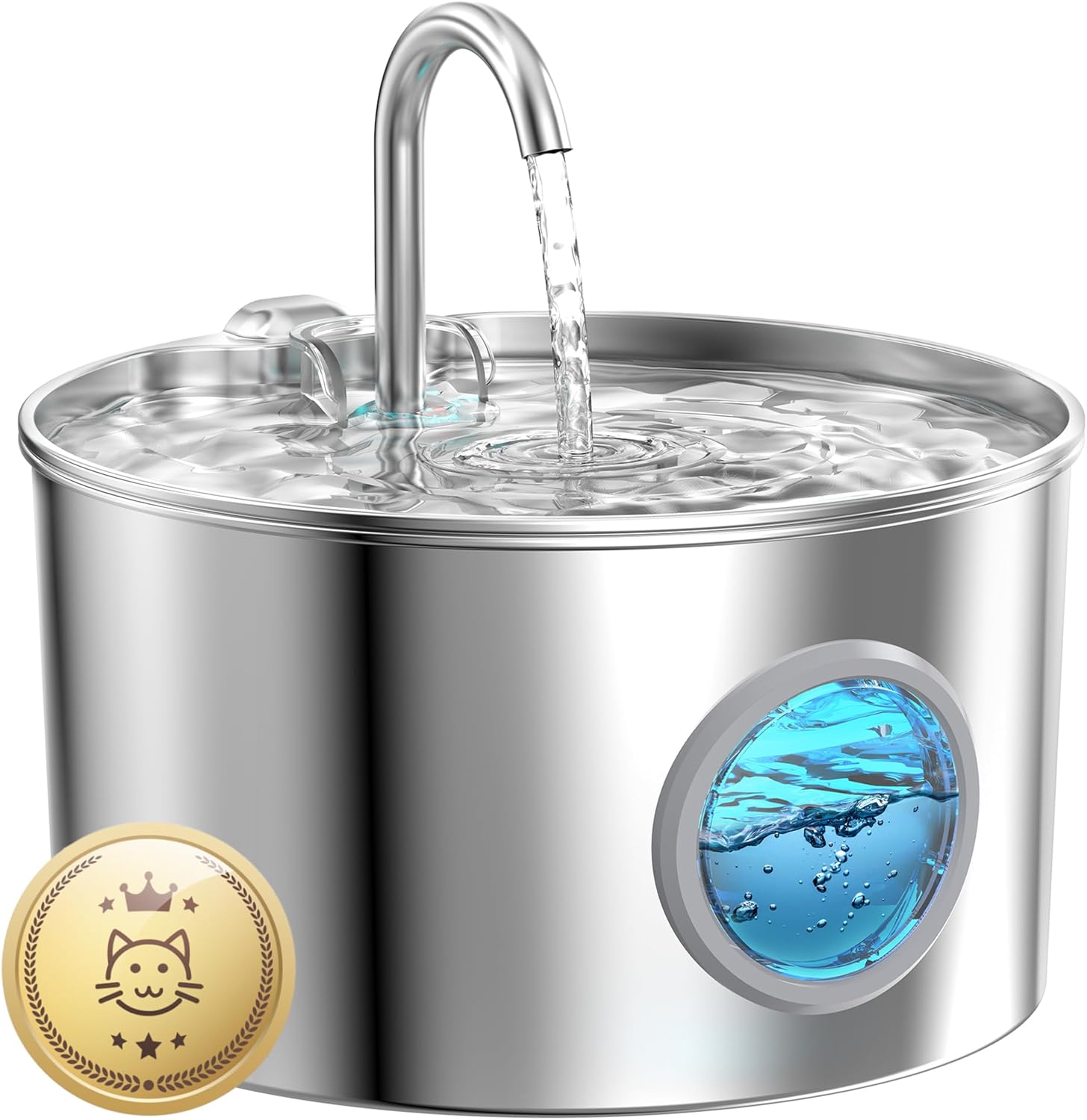
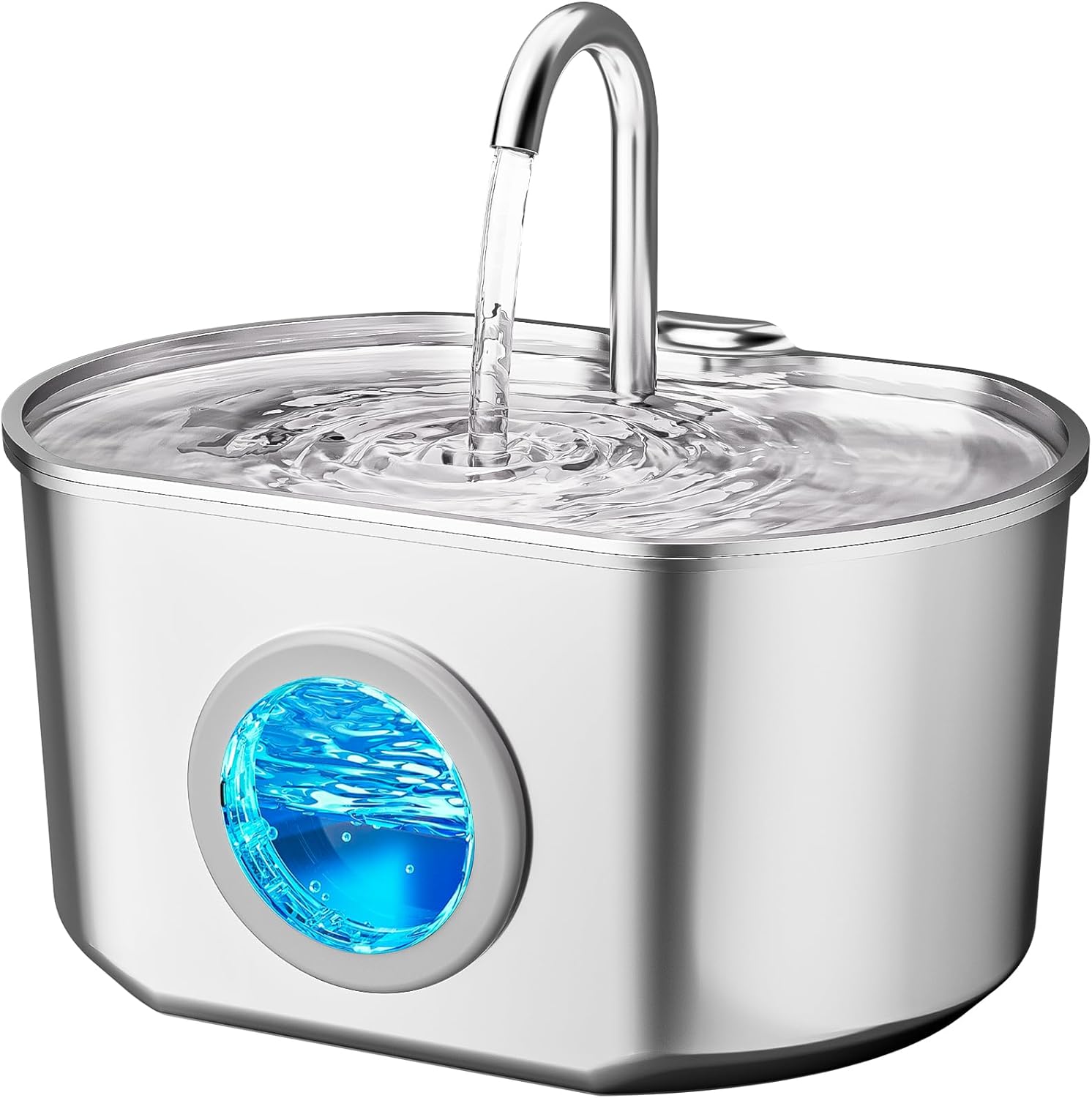
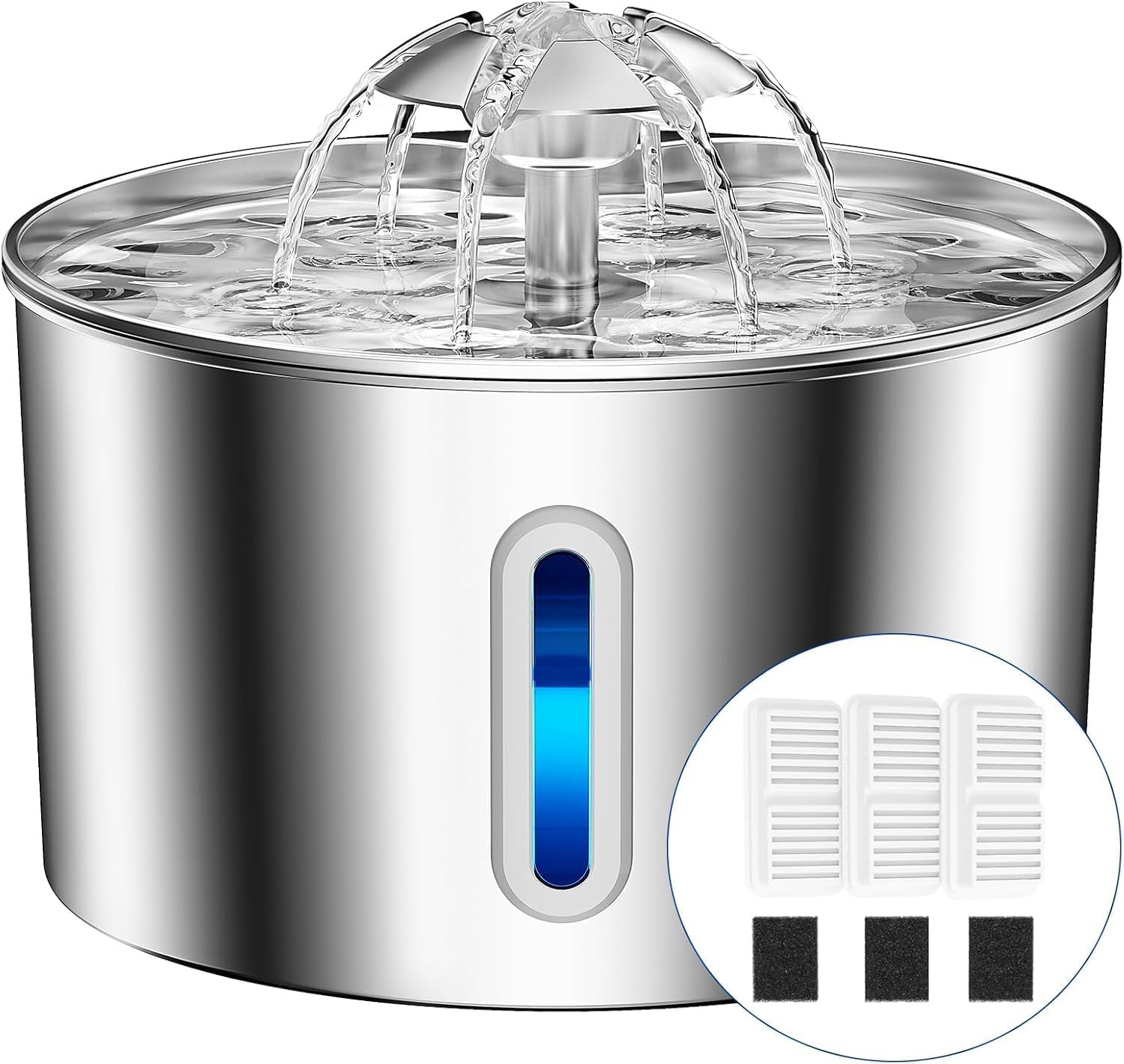
Material choice affects bacterial growth. Plastic fountains are affordable but develop microscopic scratches over time that harbor bacteria. Ceramic and stainless-steel options are harder to scratch and easier to sanitize thoroughly. If you're using the fountain long-term, the added cost of ceramic is a worthwhile investment.
Filtration quality varies significantly across models. Look for multi-stage filtration that includes at minimum a mechanical filter (to catch hair and debris), activated carbon (to remove chlorine and odors), and an ion exchange resin (to soften water and remove heavy metals). Single-stage carbon-only filters are less effective at producing water cats will consistently prefer.
Pump noise can cause fountain rejection. Some cats — especially those sensitive to new noises — will avoid a fountain if the pump creates noticeable sound. Check reviews specifically for noise feedback, particularly from owners with noise-sensitive cats. Submersible pump designs are generally quieter than external pump models.
Capacity requirements depend on your household. For a single cat, a 1.5L–2L fountain is generally adequate with once-weekly cleaning. For two or more cats, a 2.5L+ capacity reduces cleaning frequency and ensures adequate supply between refills. Consider how often you're willing to clean when selecting fountain size.