How to Build the Right Feeding & Hydration Setup
Gravity feeders and programmable feeders solve different problems. A gravity feeder keeps food constantly available with zero electronics to fail — ideal for cats that self-regulate and for weekend absences. A programmable feeder dispenses fixed portions on a schedule, which is essential for cats that overeat or need weight management. Be honest about which category your cat falls into before choosing; a gravity feeder in front of a food-motivated cat is an all-you-can-eat buffet.
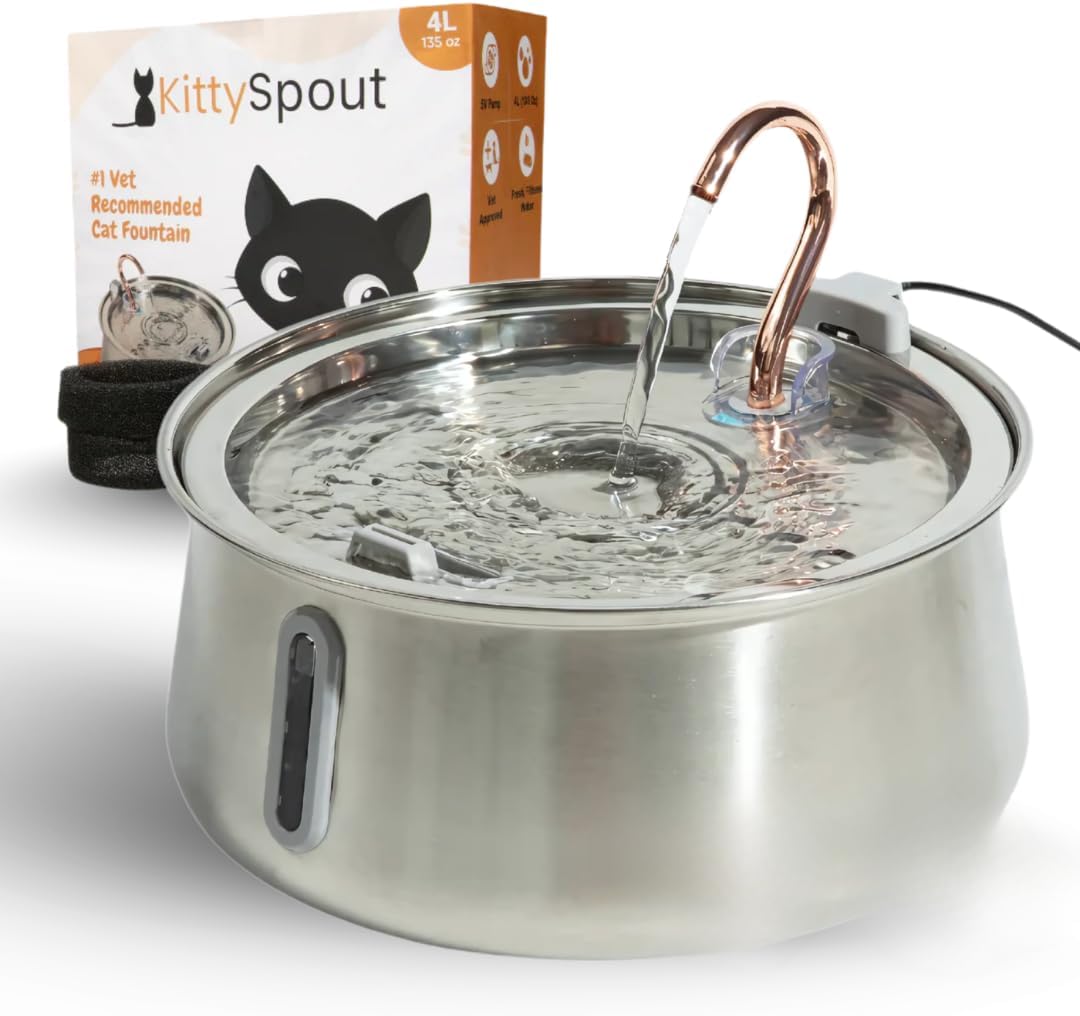
Fountain capacity should match your household and your cleaning habits. A 2.5L fountain suits one or two cats with a weekly clean; a 4L unit stretches refill intervals for multi-cat homes. Larger reservoirs are not just about convenience — running low exposes the pump, which shortens its life and creates noise that can put cats off drinking.
Stainless steel surfaces earn their premium in water gear. Feline chin acne is commonly linked to bacteria harbored in scratched plastic bowls and trays. Fountains with stainless drinking surfaces are easier to sanitize and stay cleaner between washes — worth prioritizing if your cat has ever had chin breakouts.
Budget for filters from day one. A fountain's carbon and mechanical filters need replacing every 2–4 weeks, and skipping replacements is the most common reason fountains start smelling or cats stop using them. Multi-packs bring the per-filter cost down substantially — a 4-month supply purchased with the fountain means you're never tempted to stretch a spent filter.
Our Final Recommendation
For a complete plug-and-play station, the ZOMISIA 2-in-1 gravity set covers food and water in one purchase and needs no power at all. Cats that need portion control are better served by the VOLUAS 4L programmable feeder. On the hydration side, the PETLIBRO stainless fountain is the pick for easy cleaning and quiet operation, the KittySpout 4L suits multi-cat homes, and PETLIBRO's 8-count filter pack keeps a Dockstream fountain running fresh for months.